
Mark Taylor (the cricketer) has an estimated net worth of around US$50 million as of June 2026, though that number comes with some important caveats you should understand before taking it at face value. What's clear is that his wealth has been built across three distinct phases: a long and decorated playing career, a multi-decade media career with Australia's Nine Network, and a remarkably durable endorsement relationship with Fujitsu General that has run continuously since 1998. That combination of income streams, sustained over 25-plus years, is the real story behind the figure.
Mark Taylor Cricketer Net Worth Estimate and Income Sources

Russell Cho
6 Jun 2026
First, let's confirm which Mark Taylor we're talking about
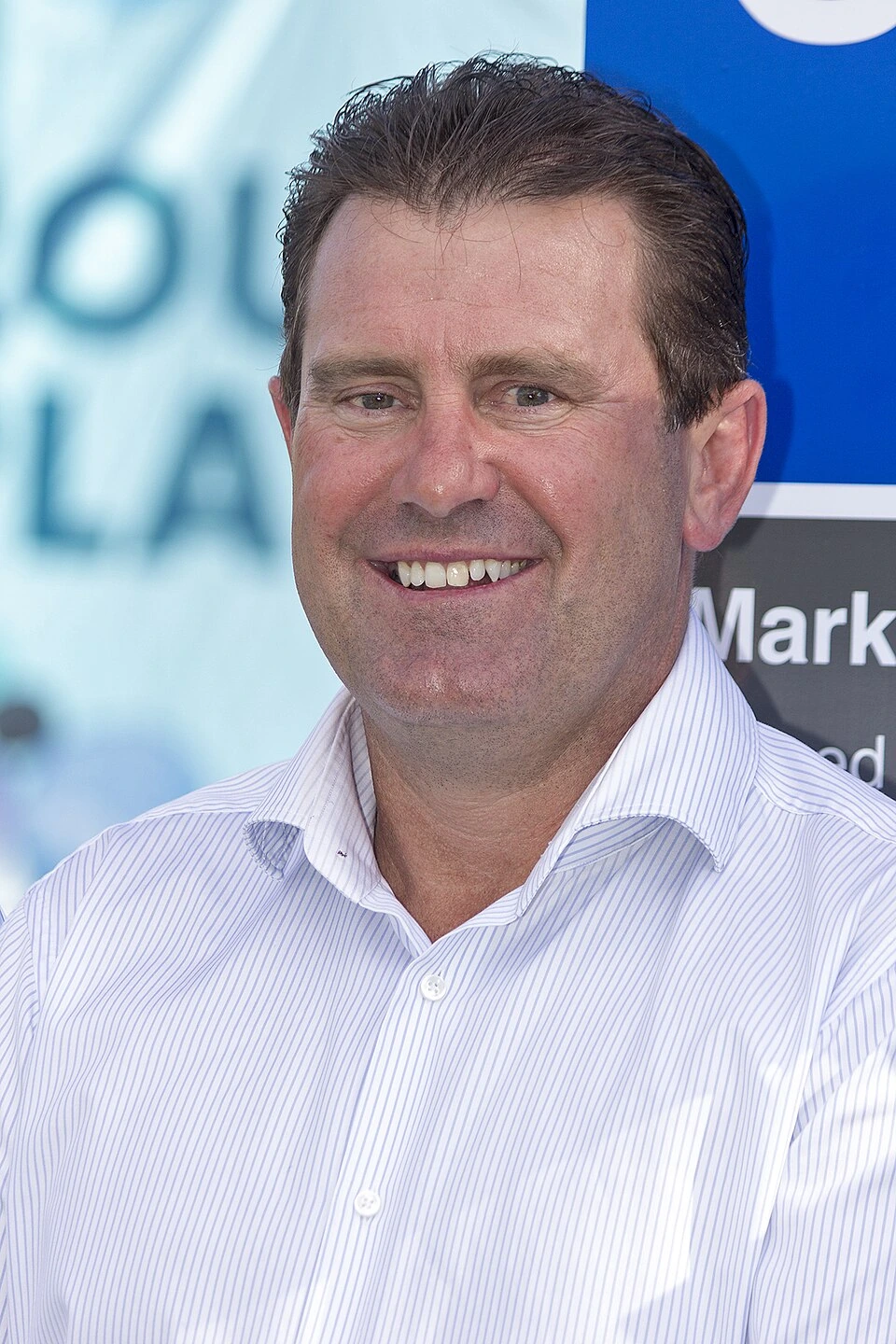
There are several public figures named Mark Taylor, so anchoring to the right one matters. This article is about Mark Anthony Taylor AO, the former Australian Test cricket captain, born on 27 October 1964. He is confirmed in Cricket Australia's official player directory, ESPNcricinfo's Statsguru (player 7924), and the National Portrait Gallery of Australia, which identifies him as the Australian captain from 1994 until his retirement from Test cricket in 1999. If a net worth article you're reading doesn't mention the captaincy, the 1964 birth year, or the Nine Network commentary role, there's a real chance it's about a different Mark Taylor entirely.
The best current net worth estimate (and what it actually means)
The US$50 million figure is the most widely circulated estimate for Mark Taylor's net worth, and you'll see it repeated across several online sources including Net Worth Genius and updated 2026 versions on sites like Cine Net Worth. If you are specifically looking at Mark Crumpton net worth, this article can help you avoid mixing figures between different people with similar names US$50 million figure. That's not nothing, but here's the honest context: none of these are primary financial disclosures. There's no published balance sheet, no forensic audit, no court document, and no self-reported figure from Taylor himself. These sites are aggregating secondary estimates, and the methodology behind the number is opaque at best.
A net worth figure, properly calculated, is total assets minus total liabilities. For a private individual like Taylor, you'd need property records, investment disclosures, contract values, and debt information to arrive at that number with any confidence. None of that is publicly available for him. So treat US$50 million as a plausible ballpark given his career longevity and multiple income streams, not as a verified figure. Think of it this way: it's an informed guess, not a bank statement.
What he earned during his playing career

Taylor's playing career ran from his Test debut in 1988 through to his retirement in 1999, during which he played 104 Tests and captained Australia in 50 of them. That's an elite-level career by any measure, and the financial rewards reflected it, though they were modest by today's standards. Precise contract figures for Australian cricketers in the late 1980s and 1990s aren't publicly documented in any accessible archive, so it would be misleading to put a specific dollar figure on his playing-era income. What we can say is that central contracts with Cricket Australia, match fees, and domestic cricket payments were the primary income channels during this period. International Test captains were the highest earners in the system, but even they were earning a fraction of what top-tier athletes in comparable sports command today.
Taylor was also known for his personal brand during his playing years, and Fujitsu General became his first major endorsement partner in 1998, while he was still an active player. That relationship, which began more than 25 years ago, turned out to be far more financially significant than any single contract or match fee from his playing days.
Post-retirement income: media, commentary, and endorsements
Nine Network commentary

After retiring from Test cricket in 1999, Taylor transitioned almost immediately into cricket commentary with the Nine Network. According to Cricket Australia's player profile and Wikipedia's entry on Taylor, he has been a long-time Nine commentator for over a decade, and Nine for Brands issued a media release confirming that his cricket contract with Nine was extended by three years, indicating this is a structured, ongoing paid arrangement rather than ad hoc appearances. The exact annual value of that contract isn't public, but multi-year media contracts for high-profile sports commentators in Australian broadcast television are genuinely substantial. It's reasonable to assume this represents one of his primary income sources in retirement.
Fujitsu General endorsement: the long game
This is arguably the most interesting part of Taylor's financial profile. Fujitsu General Australia publicly announced that Taylor first became its brand ambassador in 1998 and has renewed the partnership multiple times since. A 2025 renewal extended the agreement through to 2027, meaning Taylor will have been the face of Fujitsu General for close to three decades by the time that contract expires. That kind of longevity in an endorsement relationship is genuinely rare and speaks to the commercial value Taylor's image delivers to the brand. Dollar amounts per year have not been disclosed publicly, so anyone quoting a specific figure for this deal should be treated with skepticism.
Cricket Australia board and administrative roles
Taylor was appointed to Cricket Australia's board in 2004, per SBS News reporting, and later stepped down as a director. Board-level positions in major sporting bodies typically come with director fees, though these are usually modest compared to media or endorsement income. The real value of that role is reputational and relational, reinforcing Taylor's standing in the Australian cricket ecosystem, which in turn supports his media and ambassador roles.
Speaking engagements and appearances
Former Test captains with Taylor's profile are consistently in demand on the corporate speaking circuit. While there are no publicly documented speaking fees for Taylor specifically, it's a standard income stream for retired sportspeople at his level, and it adds up meaningfully over time, particularly for someone who remained as publicly visible as Taylor has through his commentary career.
What's known and what's missing: assets, investments, and privacy gaps
Here's where the honest answer gets a bit frustrating: there is no credible public information about Mark Taylor's specific property holdings, equity interests in any businesses, investment portfolio, or any trust or foundation structures. This isn't unusual for a private Australian citizen, even a famous one. Australia doesn't have the same culture of public financial disclosure that applies to, say, US politicians or listed company executives. So the asset side of any net worth calculation for Taylor is almost entirely opaque.
What we can reasonably infer is that someone with Taylor's income trajectory over 25 post-retirement years, combining media contracts, long-running endorsements, board fees, and speaking income, has had both the capacity and the time to accumulate meaningful assets. Real estate is the most common wealth store for Australians in his income bracket, but we have no verified data on property holdings. Business investments, if any exist, are equally undocumented in any public source reviewed for this article.
| Income Source | Evidence Available | Dollar Amounts Known | Confidence Level |
|---|---|---|---|
| Playing career (Cricket Australia contracts, match fees) | High (career record is public) | No (no primary pay documents) | Low for specific figures |
| Nine Network commentary contracts | High (Nine for Brands announcement, player profile) | No (contract value not disclosed) | Medium for ongoing income |
| Fujitsu General endorsement (1998-2027+) | Very High (multiple public announcements) | No (deal value not disclosed) | High for continuity, low for amount |
| Cricket Australia board director fees | Medium (SBS News reporting) | No | Low |
| Corporate speaking engagements | Low (no public documentation) | No | Low |
| Property, investments, business equity | None found | No | Very low / unknown |
Why net worth numbers for Taylor vary (and how to check them)
If you've searched for Mark Taylor's net worth and found different numbers on different sites, there are a few reasons for that. For readers who are specifically trying to nail down Mark Crandall net worth, this article’s approach to method and data gaps is a useful comparison point. First, most of those sites are secondary estimate aggregators. They aren't running asset investigations; they're repeating or slightly adjusting figures that originated somewhere else. Second, name confusion is a genuine problem: there are other notable Mark Taylors in public life, and some financial profile sites may be blending information from different people with the same name. Third, the 1988 to 1999 playing era predates easy digital record-keeping, so precise historical earnings data simply doesn't exist in any publicly accessible form.
Here's a quick verification checklist to use when evaluating any Mark Taylor net worth claim you find online: If you want to sanity-check any claim about Mark Taylor net worth, use this checklist to separate primary reporting from reused estimates mark crilley net worth.
- Confirm identity: does the article mention the 27 October 1964 birth date, the Test captaincy from 1994 to 1999, or the Nine Network commentary role? If not, it may be about a different Mark Taylor.
- Check ESPNcricinfo or Cricket Australia's official player page to cross-reference career details.
- Look for the Fujitsu General ambassador relationship (1998 onward) as a signature data point for this specific Mark Taylor's post-career income profile.
- Ask whether the site publishes its methodology. Assets minus liabilities, with sources, is the standard. If a site just asserts a dollar figure with no evidence trail, discount it heavily.
- Treat any figure as a range, not a precise number. Given the opacity of Taylor's financial life, US$30 million to US$60 million is a more honest representation of uncertainty than a single precise figure.
The bigger picture: how Taylor built wealth differently from modern cricketers
Taylor's wealth story is really a story about longevity and brand consistency. He didn't retire into obscurity; he moved directly into broadcast media and sustained a high public profile for more than two decades. That's relatively rare. Plenty of former Test captains fade from public visibility within a few years of retirement, which caps their earning potential significantly. Taylor maintained relevance through Nine's cricket coverage and through a single, long-running commercial relationship that has now outlasted most careers in sport. That 1998 Fujitsu General deal, still active heading into 2027, is the kind of financial anchor that compounds over time in ways that are easy to underestimate.
For context among public figures named Mark, Taylor sits in a different category from purely media personalities like those covered elsewhere in this space. His wealth base is more institutional, tied to Australia's cricket ecosystem rather than individual creative output or entrepreneurial ventures. It's a quieter kind of accumulation, built on sustained professional credibility rather than a single high-visibility financial event. That's worth keeping in mind when interpreting both the estimate and the limited disclosure around it.
FAQ
Is the US$50 million estimate for Mark Taylor cricketer net worth based on real financial documents?
No. The article explains there is no published balance sheet, no forensic audit, and no self-reported net worth from Taylor. Treat the figure as a secondary aggregation or ballpark, not a verified disclosure.
How can I confirm I am looking at the correct Mark Taylor when searching net worth?
Check for identifying details mentioned in the article, such as his 27 October 1964 birth date, Test captaincy (1994 to 1999), and the Nine Network commentary role. Many other public figures share the same name, which is a common reason online net worth numbers differ.
Why do different websites show very different Mark Taylor cricketer net worth amounts?
Most sites are reusing or lightly adjusting earlier secondary estimates, and some may be blending information across people with the same name. Also, earnings from the late 1980s and 1990s are harder to quantify because detailed contract figures are not publicly archived.
Does net worth include things like unpaid endorsement commitments or future contract extensions?
Usually net worth refers to current total assets minus liabilities, not future earnings. The article notes the Fujitsu General and Nine arrangements are ongoing, but any future value would not automatically be reflected as present net worth without disclosure of actual assets or contracted cash already received.
Could Mark Taylor’s board position at Cricket Australia materially change his net worth?
It could add incremental income, but the article frames director fees as typically modest compared with media and endorsement pay. The bigger impact is likely reputational and relational, which can indirectly support other income streams.
If match fees and Test earnings are unclear, how do people justify a ballpark net worth figure anyway?
The article’s logic is inference based on career longevity and multiple post-retirement income channels. Even when exact playing-era contract values are not public, sustained media and long-running endorsement income can support meaningful asset accumulation over decades.
What assets are most likely included in a realistic Mark Taylor cricketer net worth estimate, given Australia’s disclosure limits?
The article suggests real estate is common for Australians in his likely income bracket, but it also notes property holdings are not verified publicly. It also points out investment portfolios and business equity are largely undocumented, so estimates often have to guess the asset mix.
Is Mark Taylor’s net worth likely to be higher or lower than US$50 million because of debt or liabilities?
That is impossible to assess from public information described in the article. Without evidence of debts, taxes, or major liabilities, any single-number net worth claim is inherently uncertain because net worth depends on both assets and liabilities.
Should I trust a specific dollar-per-year figure for his Fujitsu General endorsement?
Be skeptical. The article says the annual dollar amounts are not publicly disclosed, even though renewals extend the relationship through the late 2020s. Websites that state exact yearly numbers are guessing unless they cite primary disclosures.
How can I sanity-check a net worth claim if I want to compare it to other estimate sites?
Use the article’s checklist approach: look for primary reporting versus reused estimates, confirm the person’s identity details, and question any number that relies on unverifiable contract values. If the site cannot explain methodology or data inputs, it is more likely repetition than a real calculation.
Next Article
Mark Crumpacker Net Worth: Estimated Range and Breakdown
Estimate Mark Crumpacker net worth with breakdown, income sources, assets and liabilities, plus how to verify current cl