
Mark Flanagan the chef has an estimated net worth in the range of $1 million to $3.5 million as of 2026, based on the only numeric figure available from aggregator sites and what we know about senior Royal Household employment. That range is genuinely uncertain because no audited financial disclosure, Forbes-style profile, or credible wealth journalism has been published for him. The honest answer is: the number is plausible but loosely evidenced, and anyone citing a precise figure is likely working from the same shaky aggregator data.
Mark Flanagan Chef Net Worth: Estimate and How It’s Built

Russell Cho
7 May 2026
Which Mark Flanagan this article is about

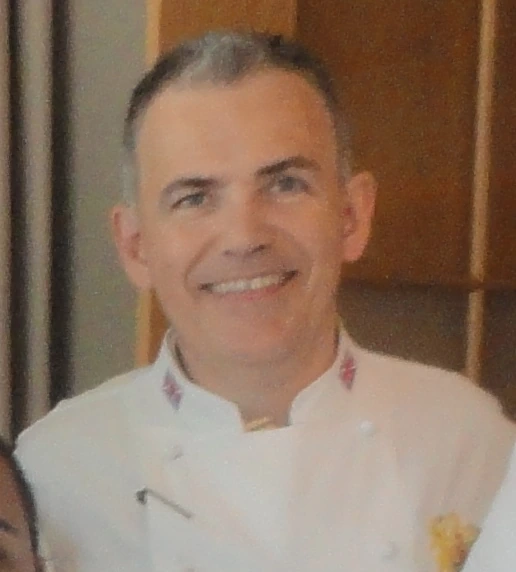
"Mark Flanagan" is a genuinely common name with real disambiguation problems. Wikipedia's disambiguation page for the name lists at least an actor, a boxer, a nightclub owner based in Los Angeles, several athletes, and a politician, in addition to the chef. If you landed here after a quick search, it's easy to conflate them. This article is specifically about Mark Flanagan the British chef, most widely recognized as the Royal Chef of the British Royal Household.
His identity markers are consistent and verifiable: he succeeded Lionel Mann as Royal Chef in 2002, he is credited as co-author of "A Royal Cookbook: Seasonal Recipes from Buckingham Palace" (2014, published by the Royal Collection Trust), and he appears in documentary credits as "Self - Royal Chef" on titles including a 2009 MasterChef Goes Large episode filmed at Buckingham Palace.
IMDb lists the 2009 “Masterchef Goes Large” episode (“Buckingham Palace Catering Challenge”) as featuring Mark Flanagan credited as “Self - Royal Chef. ” a 2009 MasterChef Goes Large episode filmed at Buckingham Palace.
He was upgraded to Lieutenant of the Royal Victorian Order (LVO) in the 2022 New Year Honours. None of those markers apply to the actor, boxer, or LA nightclub owner who share his name.
The net worth estimate and how current it is
The most specific number floating around for Mark Flanagan (chef) comes from PeopleAi, an aggregator site that estimated his net worth at approximately $3. 28 million as of October 2025. 28 million as of October 2025 mark florman net worth.
Their own disclaimer is worth quoting: the figures are "just estimation" and "by no means accurate. " For context, they also show a year-by-year series: $2. 62 million in 2023, $2. 95 million in 2024, and $3.
28 million in 2025, suggesting algorithmic upward trending rather than verified data. No Forbes profile, Bloomberg entry, or equivalent credible wealth journalism has been published for him, which immediately tells you something: he is not a public entrepreneur with traceable equity, restaurant group ownership, or IPO history. If you're specifically interested in Mark Flaherty net worth figures and how they are estimated, you'll want to compare similar credibility signals and source quality.
My working estimate for 2026 is a range of roughly $1 million to $3.5 million. The lower bound reflects a long senior public-sector career in the UK without confirmed private restaurant ownership or significant equity events. The upper bound leans on the PeopleAi figure and factors in two decades of a senior role, book royalties, media appearance fees, and the compounding of modest but steady income. Think of it this way: a senior executive chef employed by a major institution for 20-plus years in the UK, with some media and publishing income on the side, landing somewhere in the low-to-mid seven figures is entirely plausible, even without being a restaurant entrepreneur.
How Mark Flanagan built his career and wealth

Flanagan's wealth story is fundamentally an employment story, not a founder story. That's an important distinction from how many celebrity chefs accumulate money. He did not build a restaurant empire, launch a food brand, or take equity in a hospitality group in the way that, say, a TV chef turned entrepreneur might. Instead, he built a career inside one of the world's most prestigious institutional kitchens and rose to its top position.
He joined the Royal Household in 2002, succeeding Lionel Mann and taking on the role of Royal Chef, which effectively makes him the head of culinary operations for the British monarchy. Over two-plus decades in that role, his career highlights include catering the 2011 wedding breakfast for the Duke and Duchess of Cambridge, a 2016 state dinner for President Obama, and a 2017 state dinner for the King and Queen of Spain. These are not small functions: they involve teams, logistics, and the kind of responsibility that justifies a senior executive salary. His 2022 LVO honour reflects long and meritorious royal service, the kind of recognition that typically accompanies a career spanning decades at the top of a role.
His business portfolio: what we actually know
This is where the picture is thinner than it would be for a celebrity chef with a restaurant group. Based on available research, there is no verified evidence of Mark Flanagan owning or co-owning restaurants, holding equity in a hospitality brand, or operating a food business outside the Royal Household. His public portfolio breaks down as follows:
- Royal Household employment: Head chef and senior figure in the Royal Household since 2002, serving under both Queen Elizabeth II and now King Charles III
- Book authorship: Co-author (with Edward Griffiths) of "A Royal Cookbook: Seasonal Recipes from Buckingham Palace" (2014), published by the Royal Collection Trust
- Documentary and television appearances: Credited on MasterChef Goes Large (2009), Queen of the World, and Windsor Castle: A Royal Year, among others, always in the role of Self - Royal Chef
- No confirmed restaurant ownership, franchise deal, or independent brand was surfaced in available public records or business registries
This is a narrower portfolio than you'd see from a chef who has commercialized their name, but it's also coherent: the Royal Household role likely comes with constraints on outside commercial activity, and Flanagan's public profile has consistently reflected an institutional, service-oriented identity rather than an entrepreneurial one.
Income streams that likely contribute to his net worth
Even without restaurant ownership, there are several realistic income channels worth thinking through:
| Income Stream | Likelihood | Notes |
|---|---|---|
| Royal Household salary | Confirmed employment | Senior executive chef in a major UK institution; exact figure not public |
| Book royalties | Confirmed publication | "A Royal Cookbook" (2014) via Royal Collection Trust; sales figures not disclosed |
| TV/documentary appearance fees | Confirmed credits | MasterChef Goes Large, Queen of the World, Windsor Castle: A Royal Year; fees not disclosed |
| Speaking or event appearances | Plausible but unconfirmed | Senior chefs of his profile often receive fees for industry events and culinary talks |
| Endorsements or brand partnerships | No evidence found | No confirmed brand deals surfaced in available sources |
| Restaurant or equity income | No evidence found | No restaurant ownership or equity stake confirmed |
The salary angle is worth dwelling on. The Royal Household does not publish individual salary data, but senior chef roles at comparable luxury or institutional employers in the UK can range from roughly £70,000 to £120,000 or more annually at the executive level. Over 20-plus years, with pension contributions and the typical UK benefits structure, that career alone could plausibly produce a net worth in the low-to-mid millions even without entrepreneurial income.
What sources support the estimate, and what's missing
Let's be direct about the evidence quality here, because this matters if you're trying to use this number for anything meaningful.
- What supports the estimate: Two decades of confirmed senior employment at the Royal Household, a verified book publication with a major institutional publisher, and multiple confirmed TV credits all point to sustained professional income over a long period
- What the PeopleAi figure is worth: Their $3.28 million estimate (October 2025) is algorithmically derived from public social and professional signals, not from audited accounts or verified financial disclosures; their own disclaimer says it is not accurate
- What is missing: No Forbes or Bloomberg profile, no Companies House entity tied to Mark Flanagan (chef) as a director, no restaurant group ownership records, no publicly filed earnings or salary disclosure, and no credible wealth journalism with sourced data
- What this means for reliability: The estimate is plausible but speculative; it should be treated as a rough benchmark, not a confirmed figure
This situation is actually pretty common for chefs who build their careers inside institutions rather than as public entrepreneurs. Compare this to the kind of traceable financial footprint you'd find for a chef who owns a restaurant group: you can look up Companies House filings, annual accounts, and director records. For Flanagan, the paper trail is thinner because his career path hasn't generated those kinds of public corporate filings.
How to verify or refresh this figure today

If you're doing deeper research and want to pressure-test or update this estimate, here's a practical checklist you can actually run through today:
- Search UK Companies House (find-and-update.company-information.service.gov.uk) for any company with Mark Flanagan listed as a director or person of significant control; if he owns or co-owns a food business, it will appear here
- Check the Royal Collection Trust website and shop for any updated publications or royalty-generating products connected to Mark Flanagan
- Search IMDb and TV Guide for any new documentary or media credits from 2025 or 2026 that might indicate increased media income
- Check the London Gazette (thegazette.co.uk) for any honours, appointments, or official Royal Household records mentioning Flanagan that might give career status updates
- Search PeopleAi, CelebsAgeWiki, or similar aggregators only as a rough baseline, and always note their disclaimers explicitly when quoting figures
- Look for any interviews, profiles, or features in trade publications like The Caterer or industry outlets from 2025 or 2026, which sometimes contain salary context or career updates for senior chefs
- Cross-reference against verified Royal Household staff news or official press releases, which occasionally mention senior staff by name in ceremonial or state dinner contexts
Why this matters, and how it compares to other notable Marks
Mark Flanagan's financial profile is a useful case study in how institutional prestige and entrepreneurial wealth diverge. His career puts him at the top of one of the most storied culinary roles in the world, but that role is fundamentally salaried employment rather than equity ownership. That's a different wealth-building trajectory from, say, a real estate investor like Mark Ferguson, whose net worth is driven by property portfolios and business ownership with more traceable financial signals.
This is a different story from Mark Ferguson real estate, where the wealth often comes from property portfolios and related business ownership real estate investor like Mark Ferguson.
It's also a reminder that "famous" and "wealthy" don't always scale together in the same way: Flanagan has cooked for presidents and monarchs, received royal honours, and co-authored a book published by the Royal Collection Trust, but his financial profile remains modest compared to celebrity chefs who have commercialized their names into restaurant chains, TV franchises, and product lines. For fans and researchers, the key takeaway is that the $1 million to $3.
5 million range is a reasonable working estimate, but anyone wanting precision should run through the verification checklist above and treat any aggregator figure with appropriate skepticism.
FAQ
Why do net worth numbers for Mark Flanagan (chef) vary so much between websites?
Most sites rely on rough estimation models because there is no independently verified disclosure of assets or income for him. If you see a wide range, it usually reflects different assumptions about salary level, pension growth, and whether book and media earnings are treated as minor or meaningful.
How can I tell I am reading about the correct Mark Flanagan, not someone else with the same name?
Look for identity markers tied to the Royal Household, such as the Royal Chef succession in 2002, the co-authored Royal Collection Trust cookbook, or documentary credits listing him specifically as Royal Chef. If those markers are missing and the page discusses unrelated industries, it is likely a different person.
Does the LVO (Lieutenant of the Royal Victorian Order) mean he is automatically very wealthy?
Not necessarily. Royal honours typically recognize service and merit rather than investment outcomes, so they do not provide direct evidence of net worth. Wealth and recognition can correlate, but the honour itself is not a financial metric.
Could he earn significant money from cookbook royalties or media appearances even if he is mainly a salaried chef?
Yes, but the impact is hard to quantify without publishing royalty details. A cookbook published by a major institution can generate some income, but royalty rates vary widely, and media fees depend on the type and duration of appearances, so it is best treated as supplementary rather than the core driver.
Are there any reliable records I can check beyond net worth websites?
For an institutional employee, you will usually have fewer direct financial records. Instead of searching for corporate filings, focus on verifiable employment-related signals like official credits, published book metadata, and documented appointments or honours, then treat any wealth figures as educated estimates.
What is the main limitation of using aggregator sites like PeopleAi for net worth?
They themselves disclose that the figures are not accurate, and the model often infers trends from patterns rather than assets you can audit. If the site shows year-by-year growth, it may be algorithmic, not evidence of actual revaluation events or new equity ownership.
Why does the article assume his wealth is more likely “employment-based” than “founder-based”?
Because the publicly documented career path centers on long-term senior service within the Royal Household, and the available research does not show restaurant ownership, hospitality equity, or comparable founder activities. When those founder signals are absent, net worth is more plausibly explained by salary, benefits, and pension rather than business ownership.
Could he have private investments that are not mentioned publicly?
Yes, any individual can hold private investments that are not publicly reported. The practical implication is that a net worth estimate cannot fully account for hidden assets, which is why ranges are more honest than precise figures in cases like this.
If I want to update the estimate in 2026, what should I verify first?
Start by verifying any new income-linked public activity since 2025, such as additional book releases, major documentary credits, or public speaking engagements. Then reassess the assumptions used by estimation models, especially whether they are attributing growth to salary progression, royalties, or media work.
Next Article
Mark Ferguson Real Estate Net Worth: How to Verify It
Verify Mark Ferguson real estate net worth with property records, ownership data, and credible signals to build an evide