
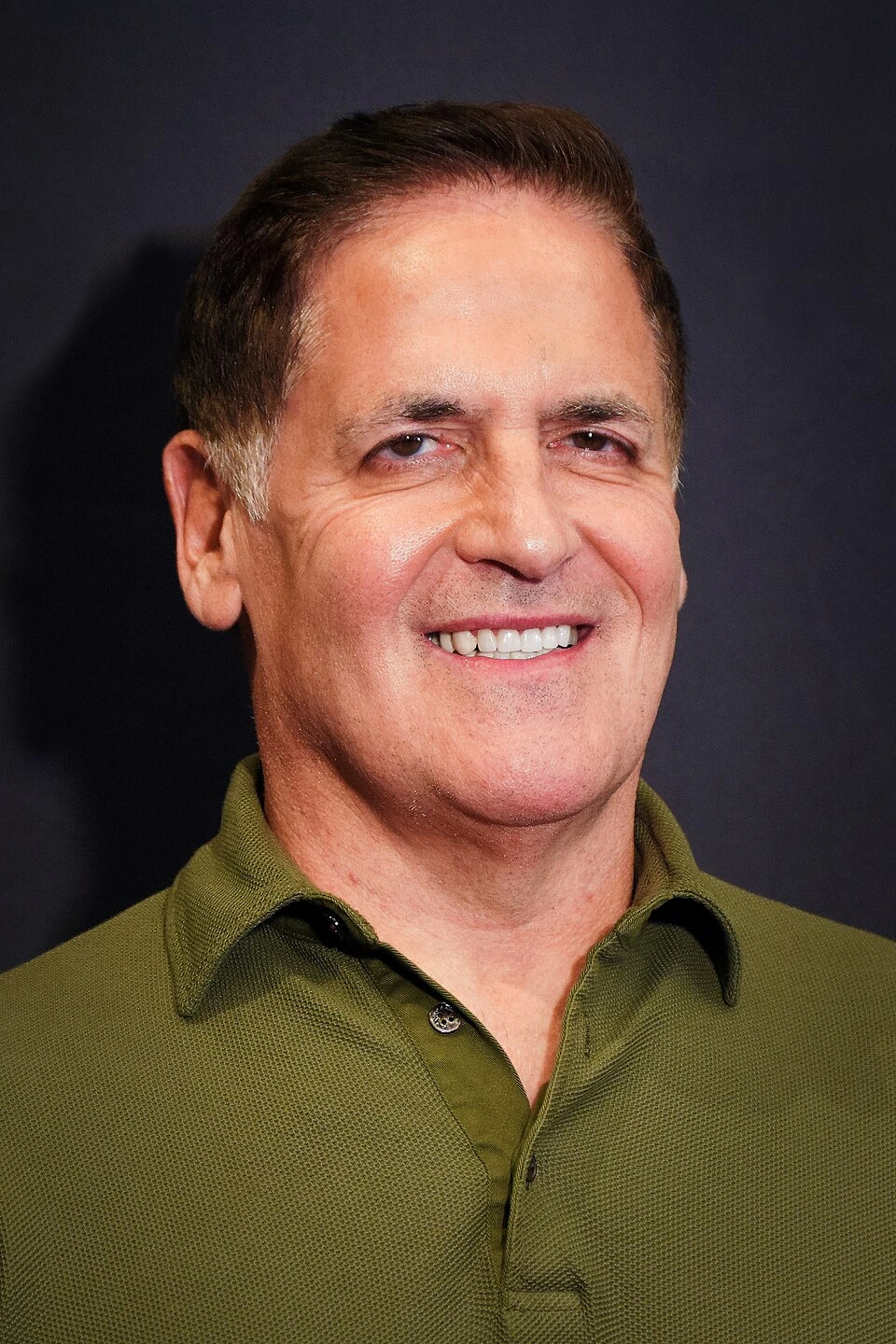
Mark Chabenisky is Mark Cuban. The surname 'Chabenisky' is the original family name carried by Cuban's grandparents when they immigrated from Russia. After arriving through Ellis Island, the name was shortened to 'Cuban,' and that's the name the Dallas Mavericks owner, Shark Tank investor, and tech entrepreneur has been known by ever since. As of early 2026, Forbes estimates Mark Cuban's net worth at approximately $6 billion, with Celebrity Net Worth placing the figure slightly higher at $6.5 billion. The most defensible range, based on public filings and credible financial reporting, is $5.5 billion to $6.5 billion.
Mark Chabenisky Net Worth 2026 Estimate and How It’s Calculated

Russell Cho
16 May 2026
Who exactly is Mark Chabenisky?

The connection between the names is well-documented. Wikipedia's biography of Mark Cuban explicitly states that his family's original surname was Chabenisky, and CNBC's profile of him repeats the same detail, describing how his grandparents came from Russia with that name before it was anglicized. Encyclopaedia Britannica identifies Mark Cuban as an American entrepreneur, venture capitalist, and television personality, confirming he is the same individual associated with Broadcast.com, the Dallas Mavericks, and the ABC show Shark Tank.
So if you landed here searching 'Mark Chabenisky net worth,' you're almost certainly trying to find information about Mark Cuban. If you're looking up Mark Chmura net worth, it's worth remembering that these estimates usually come from similar public filings, valuations, and market-based assumptions. There is no other widely reported public figure by that name. The Chabenisky reference occasionally surfaces in genealogy discussions, historical immigration records, and occasionally in trivia articles about how celebrity surnames changed at Ellis Island. For the purposes of this article, Mark Chabenisky and Mark Cuban are the same person.
What 'net worth' actually means here
Net worth is a simple concept on paper: total assets minus total liabilities. In practice, estimating it for a billionaire like Cuban is messier than it sounds. A large portion of his wealth is tied up in private business holdings, minority stakes, and investments that don't trade on public markets. There's no single authoritative number because nobody outside of Cuban's accountants and attorneys sees the full picture.
The two most credible methodologies used by financial trackers are Forbes' and Bloomberg's. Forbes reviews SEC documents, court filings, probate records, and news articles, then applies valuation models to private businesses (including liquidity discounts to account for the fact that private stakes are harder to sell quickly). Bloomberg's Billionaires Index updates daily using market-based valuations and public holding data. Both are educated estimates, not audited balance sheets. When you see figures like $6 billion or $6.5 billion, treat them as well-researched approximations with an error margin of several hundred million dollars in either direction.
The current net worth estimate and how it's derived

As of May 2026, the most reliable benchmark comes from Forbes, which placed Cuban's net worth at approximately $6 billion as of January 2026. Celebrity Net Worth lists $6.5 billion. Given that Bloomberg tracks daily fluctuations based on market movements, and that a meaningful portion of Cuban's portfolio includes both private stakes and publicly visible assets, a defensible range is $5.5 billion to $6.5 billion, with the midpoint around $6 billion.
The methodology behind that range draws on three inputs: the publicly documented value of his known business stakes (some of which appear in SEC filings or have been reported in credible press), real estate holdings and other tangible assets (which can be cross-referenced through property records), and comparable transaction values from prior exits like the Broadcast.com sale. The floor of the range accounts for the possibility that some private investments have underperformed or have limited liquidity, while the ceiling reflects optimistic but plausible valuations for illiquid startup and media assets.
| Source | Estimate (as of early 2026) | Methodology |
|---|---|---|
| Forbes | $6 billion | SEC filings, court records, proprietary valuation models, liquidity discounts |
| Celebrity Net Worth | $6.5 billion | Aggregated public reporting, media deals, estimated asset values |
| Bloomberg Billionaires Index | Fluctuates daily | Market-based valuations of public and closely held holdings |
| This article's range | $5.5B – $6.5B | Cross-referencing above sources plus property and filing records |
Where the money actually came from
The Broadcast.com sale: the defining wealth event
The single biggest wealth driver in Cuban's career was the sale of Broadcast.com to Yahoo in April 1999 for approximately $5.7 billion in Yahoo stock. Cuban and his co-founder Todd Wagner had built the company starting in 1995 as AudioNet, a streaming audio service, before rebranding it as Broadcast.com and taking it public. The Yahoo acquisition valued it at a staggering multiple of its revenues, largely on the strength of dot-com era enthusiasm. Cuban reportedly hedged much of his Yahoo stock immediately after the deal closed, protecting himself from the catastrophic decline Yahoo stock suffered in the dot-com crash. That hedging decision is widely credited as the reason he retained the bulk of his paper gains as real wealth.
Dallas Mavericks ownership

Cuban purchased the Dallas Mavericks NBA franchise in 2000 for $285 million. He sold a controlling interest in the team in 2023 to Miriam Adelson and the Adelson family at a valuation widely reported around $3.5 billion. Even after ceding majority control, the transaction crystallized a substantial capital gain relative to his original purchase price and left him with a residual minority stake. Sports franchise ownership has historically been one of the most reliable long-term wealth compounders for billionaires, and the Mavericks story illustrates exactly that pattern.
Shark Tank and media income
Cuban joined ABC's Shark Tank in Season 2 and has been a regular panelist since. While his per-episode fees are not publicly disclosed, his appearances have generated substantial indirect value through deal flow: Cuban has made dozens of investments through the show, some of which have grown meaningfully. The media exposure has also reinforced his brand, which arguably increases the valuation of his other business ventures.
Cost Plus Drugs and ongoing ventures
One of Cuban's most talked-about recent ventures is Cost Plus Drugs (formally Mark Cuban Cost Plus Drug Company), a pharmaceutical pricing disruptor he launched to offer generic medications at transparent, low-cost pricing. The company attracted significant press coverage and positioned Cuban as a challenger to the pharmacy industry. Its valuation is private and not publicly disclosed, but the company's rapid growth and media profile suggest it represents a meaningful asset in his portfolio.
Other investments
Beyond the headline businesses, Cuban's wealth is diversified across a broad portfolio of startup investments (many sourced through Shark Tank and direct pitches), real estate holdings, and prior technology bets. His early investment in Magnolia Pictures, 2929 Entertainment, and HDNet (now AXS TV) reflect a pattern of betting on media distribution technology ahead of mainstream adoption. Not all of these plays have been winners, but the portfolio breadth acts as a buffer against any single underperformer.
How his wealth has changed over time
- 1995: Founds AudioNet (later Broadcast.com) with Todd Wagner, starting from a modest base of personal savings and early venture backing.
- 1998: Broadcast.com goes public on NASDAQ, making Cuban a paper billionaire almost overnight during the dot-com boom.
- April 1999: Yahoo acquires Broadcast.com for $5.7 billion in stock. Cuban hedges his Yahoo shares aggressively, preserving most of the gain as the dot-com bubble deflates.
- 2000: Purchases the Dallas Mavericks for $285 million, widely seen as an asset diversification play as well as a passion project.
- 2000–2011: Tech investments, media ventures (Magnolia Pictures, 2929 Entertainment, HDNet), and Mavericks turnaround. Net worth fluctuates but remains firmly in billionaire territory.
- 2011: Dallas Mavericks win the NBA Championship, elevating the franchise's brand value and indirectly boosting Cuban's profile and deal-making leverage.
- 2012: Joins Shark Tank as a regular investor, adding a steady stream of early-stage investments and significant ongoing media exposure.
- 2023: Sells controlling stake in the Dallas Mavericks at a valuation of approximately $3.5 billion, crystallizing massive gains over his $285 million purchase price.
- 2023–2026: Cost Plus Drugs expands, startup portfolio matures, and Cuban's net worth stabilizes in the $5.5B–$6.5B range per credible trackers.
How to verify this number yourself
You don't have to take any single site's word for it. The most useful verification steps for a figure like Cuban start with the sources that financial trackers themselves rely on. Here's where to look and what to watch for.
- SEC EDGAR filings: If Cuban holds a stake in any publicly traded company above certain thresholds, it shows up in SEC filings (13F, 13D, 13G forms). Search EDGAR at sec.gov for his name or entities associated with him.
- Property records: Real estate holdings are public record in most U.S. jurisdictions. County assessor websites let you search by owner name to identify known properties and their assessed values.
- Court and probate records: Major financial disputes, divorce proceedings, or business litigation can reveal asset values under oath. Forbes explicitly cites court filings as a primary source in its methodology.
- Forbes 400 and Bloomberg Billionaires Index: Both publish their estimates annually or in real time and describe their methodologies openly. Cross-referencing both gives you a reasonable confidence band.
- Business filings: For private ventures like Cost Plus Drugs, look for state-level business registration filings, funding announcements in credible press (TechCrunch, WSJ, Bloomberg News), or any regulatory disclosures if the company raises from institutional investors.
- Red flags to watch: Sites that list an exact round number (like '$6,000,000,000' to the dollar) without citing a methodology are almost certainly extrapolating or copying other sites. Treat those as rough guides, not authoritative figures.
Why numbers differ across websites
You'll find slightly different figures on different sites, sometimes varying by hundreds of millions of dollars. That's not necessarily a sign that someone is making things up. It reflects genuine methodological differences: Forbes applies liquidity discounts to private holdings, Bloomberg updates daily based on market prices, and aggregator sites like Celebrity Net Worth often use a simpler approach that adds up reported deal values and publicly known assets without the same level of discounting. Cuban's portfolio includes both public market exposure and illiquid private stakes, which means the 'right' answer genuinely depends on your assumptions.
The other factor is timing. Bloomberg's data can shift by tens of millions of dollars in a single trading day if Cuban holds significant publicly traded stock positions. A Forbes estimate from January 2026 and a Bloomberg figure from May 2026 could diverge simply because of market movements in the intervening months, not because either source is wrong.
What to do when public information is sparse
For a figure as public as Mark Cuban, information is relatively abundant. But the principle applies broadly for other Marks you might research on this site: when someone's wealth is tied primarily to private businesses or closely held assets, the verification trail gets thin quickly. In those cases, the honest approach is to build a range using confirmed transaction values (sales, funding rounds, contracts) and apply reasonable multiples for assets in comparable categories. That's essentially what Forbes does with its valuation models, and it's the right framework even for less prominent figures.
If you're researching other people in the Mark space, the same verification toolkit applies whether you're looking at someone like Mark Chmura, Mark Chironna, or Mark Chopper Read. If you are also curious about Mark Chironna net worth, it helps to compare how each person’s wealth is estimated, since private holdings and timing can change the reported figures Mark Chabenisky. The depth of available data varies enormously depending on how public-facing the individual is and whether their income comes from regulated industries that require disclosures.
Common questions about Mark Chabenisky's net worth
Is Mark Chabenisky the same person as Mark Cuban?
Yes. If you're specifically tracking Mark Chao net worth, remember this article uses the same underlying person and wealth logic tied to Mark Cuban. Chabenisky is the original family surname before it was anglicized to Cuban after immigration. Multiple credible sources, including Wikipedia and CNBC, confirm this directly.
How often does the net worth estimate change?
Bloomberg updates its estimate daily, so technically the number shifts every trading day. Forbes updates its flagship lists annually. For practical purposes, think of the estimate as accurate to within a few hundred million dollars at any given moment, with more significant shifts happening around major business events like the Mavericks sale in 2023.
Why did Cuban's net worth not crater after the dot-com crash?
Because he hedged his Yahoo stock. After receiving roughly $5.7 billion in Yahoo shares from the Broadcast.com acquisition, Cuban reportedly used financial derivatives to lock in value against a stock price decline. When Yahoo's stock dropped sharply in the early 2000s, his hedges protected most of the gain. It's one of the most frequently cited examples of smart liquidity management following a large stock-based acquisition.
Is the $6 billion figure accurate or just copied between sites?
The $6 billion figure for early 2026 comes from Forbes directly, as cited by Wikipedia's biography of Cuban with a timestamp of January 2026. It's not just a number being passed around without a source. That said, Forbes' methodology includes estimates for private assets, so even this number carries a margin of uncertainty. The $5.5B–$6.5B range is a reasonable way to think about it. If you are specifically tracking mark chavez net worth, remember this $5.5B, $6.5B range is tied to how Forbes values Cuban's private assets.
Does selling the Mavericks mean Cuban is less wealthy now?
Not necessarily. For more detail on what people mean when they say Mark Chabenisky net worth, the most cited estimates focus on Mark Cuban’s current billionaire valuations. Selling a majority stake at a $3.5 billion valuation converted an illiquid asset (a private sports franchise) into liquid capital, which arguably improves his financial flexibility even if the total headline net worth number stays similar. He retained a minority stake as well, so he still has ongoing exposure to the franchise's value.
Why this matters beyond the number itself
Mark Cuban's financial story is a useful lens for understanding how tech-era wealth was actually created and preserved. The Broadcast.com deal is a textbook example of capturing value at a market peak and protecting it through smart hedging. His subsequent pivot into sports ownership, media, and pharmaceutical disruption shows a pattern of deploying capital into high-visibility sectors where his personal brand adds operational value. For anyone interested in how self-made billionaires build durable wealth, the Chabenisky-to-Cuban story is one of the clearest documented examples available.
FAQ
Is Mark Chabenisky net worth a different person from Mark Cuban?
Probably the same person. “Chabenisky” is described as the original family surname before it was anglicized to “Cuban,” so searches for “Mark Chabenisky net worth” generally map to Mark Cuban’s billionaire estimates and not a separate celebrity.
Why can my net worth number change even if nothing was “sold”?
Not directly. Net worth estimates usually represent the value of holdings at a point in time, not confirmed cash-in-hand. If you want a more action-oriented picture, look for events that increase liquidity (stock sales, IPOs, secondary offerings) versus events that mainly revalue private stakes.
What part of Mark Cuban’s net worth estimates is most likely to be wrong?
Because the biggest uncertainty is illiquid assets, especially private stakes and closely held entities. If a site does not model liquidity discounts or control premiums the same way, it can easily diverge from Forbes or Bloomberg by hundreds of millions.
How should I compare Forbes vs Bloomberg net worth numbers without getting misled?
Forbes and Bloomberg differ partly because one uses periodic list updates and valuation models, while the other marks marketable positions closer to daily price changes. When comparing two numbers, always align the date and consider that timing alone can explain a gap.
What’s the safest way to interpret the “true” net worth value?
Use a range, not a single figure. The article’s $5.5 billion to $6.5 billion framing is meant to cover valuation-model assumptions, private-market uncertainty, and day-to-day market moves for publicly traded portions.
Could Mark Cuban’s net worth drop temporarily even if his companies are doing fine?
Yes. A net worth change can come from stock price movements rather than operational performance. If a large portion of value is tied to publicly traded holdings, market volatility can move the estimate even if his businesses are stable.
Do net worth estimates come from an audited statement?
Typically, no. Most trackers estimate assets and liabilities rather than provide a full audited balance sheet. Until an asset is sold or a filing forces disclosure, components of the estimate can be modeled with assumptions.
What kinds of events move the net worth estimate the most?
Major transactions create step-changes, while ordinary valuation updates cause smaller drift. The Mavericks 2023 sale is an example of an event that can materially affect the estimate through crystallized valuation and minority stake retained.
Why do some pages get the surname story right but the net worth wrong?
Be careful about “insider” or genealogy-style content that repeats the surname history but then claims separate wealth totals. The surname change explanation can be accurate, but the net worth figure still needs valuation methodology to be meaningful.
If I want to estimate Mark Cuban myself, what inputs should I prioritize first?
If you are building your own estimate, prioritize confirmed transaction values (acquisitions, stake sales), then apply reasonable multiples for similar private assets, and treat illiquid holdings with a liquidity discount. That approach mirrors the logic behind the defensible range described.
Next Article
Mark Chavez Net Worth: How to Estimate It Reliably
Step-by-step method to estimate Mark Chavez net worth using disambiguation, credible sources, and defensible asset range